Loading...
Searching...
No Matches
DateTime.h File Reference
Cross-platform DateTime class with ISO 8601 support. More...
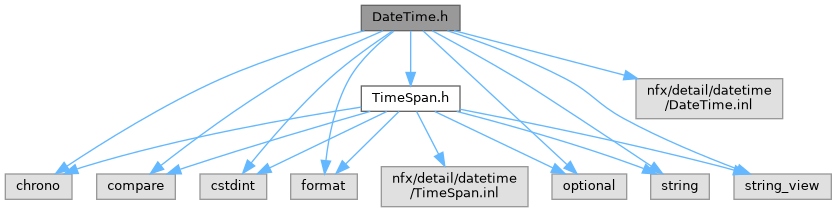
#include <chrono>#include <compare>#include <cstdint>#include <format>#include <optional>#include <string>#include <string_view>#include "TimeSpan.h"#include "nfx/detail/datetime/DateTime.inl"
Include dependency graph for datetime/DateTime.h:
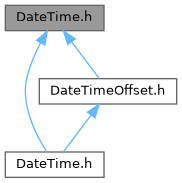
This graph shows which files directly or indirectly include this file:
Go to the source code of this file.
Classes | |
| class | nfx::time::DateTime |
| Cross-platform DateTime type with 100-nanosecond precision. More... | |
Detailed Description
Cross-platform DateTime class with ISO 8601 support.
Provides datetime operations with 100-nanosecond precision, ISO 8601 parsing and formatting, and cross-platform compatibility. Supports date range from January 1, 0001 to December 31, 9999.
- Note
- DateTime can represent both UTC and local times. For timezone-aware operations with explicit offset information, use the DateTimeOffset class instead.
ISO 8601 DateTime Format
- DateTime uses ISO 8601 format with UTC timezone for string representation:
- ┌─────────────────────────────────────────────────────────────────────┐│ ISO 8601 DateTime Format │├─────────────────────────────────────────────────────────────────────┤│ YYYY-MM-DD T HH:MM:SS [.fffffff] Z ││ │ │ │ │ │ │ │ │ │ ││ │ │ │ │ │ │ │ │ └─ Zulu (UTC indicator) ││ │ │ │ │ │ │ │ └────────── Fraction (optional) ││ │ │ │ │ │ │ └───────────────── Seconds (00-59) ││ │ │ │ │ │ └──────────────────── Minutes (00-59) ││ │ │ │ │ └─────────────────────── Hours (00-23) ││ │ │ │ └─────────────────────────── Time separator ││ │ │ └─────────────────────────────── Day (01-31) ││ │ └────────────────────────────────── Month (01-12) ││ └───────────────────────────────────── Year (0001-9999) ││ ││ Note: DateTime values can represent UTC or local time. The 'Z' ││ suffix is used for UTC serialization, but DateTime itself ││ doesn't store timezone information. │└─────────────────────────────────────────────────────────────────────┘
- Format Examples:
- ┌────────────────────────────────┬──────────────────────────────────────┐│ Input String │ Meaning │├────────────────────────────────┼──────────────────────────────────────┤│ 2024-01-15T12:30:45Z │ Jan 15, 2024, 12:30:45 UTC ││ 2024-06-20T00:00:00Z │ Jun 20, 2024, midnight UTC ││ 2024-12-31T23:59:59Z │ Dec 31, 2024, 23:59:59 UTC ││ 2024-01-15T12:30:45.1230000Z │ Precise: 7-digit fractions (123 ms) ││ 2024-01-15T12:30:45.123Z │ PreciseTrimmed: trimmed (123 ms) ││ 2024-01-15T12:30:45.123Z │ Millis: 3-digit fixed (123 ms) ││ 2024-01-15T12:30:45.123456Z │ Micros: 6-digit fixed (123.456 ms) ││ 2024-01-15T12:30:45.1234567Z │ Full precision (100 ns ticks) ││ 1970-01-01T00:00:00Z │ Unix epoch (start of Unix time) ││ 0001-01-01T00:00:00Z │ Minimum DateTime value ││ 9999-12-31T23:59:59.9999999Z │ Maximum DateTime value │└────────────────────────────────┴──────────────────────────────────────┘
- Date-Only Format:
- ┌──────────────┬────────────────────────────────────────────────┐│ YYYY-MM-DD │ Date without time (time implicitly 00:00:00) │├──────────────┼────────────────────────────────────────────────┤│ 2024-01-15 │ January 15, 2024 at midnight UTC ││ 2024-06-20 │ June 20, 2024 at midnight UTC │└──────────────┴────────────────────────────────────────────────┘
- Internal Representation:
- ┌──────────────────────────────────────────────────────────────────────┐│ DateTime stores absolute time as 100-nanosecond ticks │├──────────────────────────────────────────────────────────────────────┤│ ││ Tick = 100 nanoseconds (0.0000001 seconds) ││ ││ ┌─────────────────────────────────────────────────────────────┐ ││ │ Tick Conversion Reference │ ││ ├─────────────────────────────────────────────────────────────┤ ││ │ 1 tick = 100 nanoseconds │ ││ │ 10 ticks = 1 microsecond │ ││ │ 10,000 ticks = 1 millisecond │ ││ │ 10,000,000 ticks = 1 second │ ││ │ 600,000,000 ticks = 1 minute │ ││ │ 36,000,000,000 ticks = 1 hour │ ││ │ 864,000,000,000 ticks = 1 day │ ││ └─────────────────────────────────────────────────────────────┘ ││ ││ Epoch: Ticks are counted from January 1, 0001 00:00:00.0000000 UTC ││ ││ Range: 0001-01-01T00:00:00.0000000Z to 9999-12-31T23:59:59.9999999Z ││ (0 ticks to 3,155,378,975,999,999,999 ticks) ││ ││ Storage: Single int64_t (8 bytes) - compact and efficient │└──────────────────────────────────────────────────────────────────────┘
- Key Characteristics:
- ┌──────────────────┬───────────────────────────────────────────────┐│ Property │ Description │├──────────────────┼───────────────────────────────────────────────┤│ Timezone │ Can represent UTC or local time ││ Precision │ 100 nanoseconds (10 million ticks/second) ││ Range │ Year 1 to Year 9999 (Gregorian calendar) ││ Storage size │ 8 bytes (single int64_t) ││ String format │ ISO 8601 with 'Z' suffix (UTC) ││ Leap years │ Fully supported (Feb 29 in leap years) ││ Leap seconds │ Not supported (follows standard time) ││ Calendar │ Proleptic Gregorian (extended before 1582) ││ Use case │ System logs, timestamps, general datetime │└──────────────────┴───────────────────────────────────────────────┘
- DateTime vs DateTimeOffset:
- ┌───────────────────┬─────────────────────┬─────────────────────────────┐│ Feature │ DateTime │ DateTimeOffset │├───────────────────┼─────────────────────┼─────────────────────────────┤│ Timezone info │ None (implicit) │ Explicit offset from UTC ││ Storage │ 8 bytes │ 16 bytes (DateTime+offset) ││ String format │ ...Z │ ...±HH:MM or Z ││ Local time │ Supported via now()│ Always explicit with offset││ Comparisons │ Direct │ Via UTC conversion ││ Use for │ General datetime │ Timezone-aware operations ││ Example │ Log timestamps │ Appointment scheduling │└───────────────────┴─────────────────────┴─────────────────────────────┘
- Common DateTime Operations:
- ┌──────────────────────────────────────────────────────────────────────┐│ Operation Examples │├──────────────────────────────────────────────────────────────────────┤│ // Current local time ││ DateTime now{ DateTime::now() }; ││ ││ // Current UTC time ││ DateTime utcNow{ DateTime::utcNow() }; ││ ││ // Create specific date/time ││ DateTime dt{ 2024, 6, 15, 14, 30, 0 }; // Jun 15, 2024 14:30 ││ ││ // Parse from string (constructor - throws on error) ││ DateTime parsed1{ "2024-06-15T14:30:00Z" }; ││ ││ // Parse from string (safe - returns std::optional) ││ auto parsed2 = DateTime::fromString("2024-06-15T14:30:00Z"); ││ if (parsed2) ││ { ││ // use parsed2 ││ } ││ ││ // Arithmetic ││ DateTime later{ dt + TimeSpan::fromHours(2.5) }; ││ TimeSpan duration = later - dt; ││ ││ // Epoch timestamp conversion ││ int64_t epochSecs = dt.toEpochSeconds(); ││ DateTime fromEpoch{ DateTime::fromEpochSeconds(epochSecs) }; ││ ││ // Format output ││ std::string iso{ dt.toString(Format::Iso8601) }; ││ std::string precise{ dt.toString(Format::Iso8601Precise) }; │└──────────────────────────────────────────────────────────────────────┘
- Important Notes:
- UTC vs Local: Use now() for local time, utcNow() for UTC
- No Timezone Info: DateTime doesn't store timezone offset (use DateTimeOffset for that)
- No Daylight Saving: DateTime doesn't track DST changes automatically
- Leap Years: Automatically handled (Feb 29 exists in 2024, 2028, etc.)
- No Leap Seconds: Follows standard civil time (ignores leap seconds)
- std::chrono Integration: Convertible to/from std::chrono::system_clock::time_point
- Thread-Safe: All operations are thread-safe (immutable value type)
Definition in file datetime/DateTime.h.
