Represents a time interval in 100-nanosecond ticks. More...
#include <nfx/datetime/TimeSpan.h>
Public Member Functions | |
| constexpr | TimeSpan (std::int64_t ticks=0) noexcept |
| Construct from ticks (100-nanosecond units). | |
| constexpr | TimeSpan (std::chrono::system_clock::duration duration) noexcept |
| Construct from std::chrono duration. | |
| TimeSpan (std::string_view iso8601String) | |
| Parse from ISO 8601 string. | |
| TimeSpan (const TimeSpan &)=default | |
| Copy constructor. | |
| TimeSpan (TimeSpan &&) noexcept=default | |
| Move constructor. | |
| ~TimeSpan ()=default | |
| Destructor. | |
| TimeSpan & | operator= (const TimeSpan &)=default |
| Copy assignment operator. | |
| TimeSpan & | operator= (TimeSpan &&) noexcept=default |
| Move assignment operator. | |
| constexpr std::strong_ordering | operator<=> (const TimeSpan &other) const noexcept |
| Three-way comparison operator. | |
| constexpr bool | operator== (const TimeSpan &other) const noexcept |
| Equality comparison. | |
| constexpr TimeSpan | operator+ (const TimeSpan &other) const noexcept |
| Add time durations. | |
| constexpr TimeSpan | operator- (const TimeSpan &other) const noexcept |
| Subtract time durations. | |
| constexpr TimeSpan | operator- () const noexcept |
| Negate time duration. | |
| constexpr TimeSpan & | operator+= (const TimeSpan &other) noexcept |
| Add time duration (in-place). | |
| constexpr TimeSpan & | operator-= (const TimeSpan &other) noexcept |
| Subtract time duration (in-place). | |
| TimeSpan | operator* (double multiplier) const noexcept |
| Multiply time duration by a scalar value. | |
| TimeSpan | operator/ (double divisor) const noexcept |
| Divide time duration by a scalar value. | |
| double | operator/ (const TimeSpan &other) const noexcept |
| Divide time duration by another TimeSpan. | |
| double | days () const noexcept |
| Get total days. | |
| double | hours () const noexcept |
| Get total hours. | |
| double | minutes () const noexcept |
| Get total minutes. | |
| double | seconds () const noexcept |
| Get total seconds. | |
| double | milliseconds () const noexcept |
| Get total milliseconds. | |
| double | microseconds () const noexcept |
| Get total microseconds. | |
| double | nanoseconds () const noexcept |
| Get total nanoseconds. | |
| constexpr std::int64_t | ticks () const noexcept |
| Get tick count. | |
| std::string | toString () const |
| Convert to ISO 8601 duration string. | |
| std::chrono::system_clock::duration | toChrono () const noexcept |
| Convert to std::chrono::system_clock::duration. | |
Static Public Member Functions | |
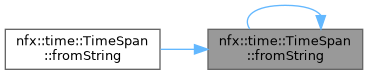
| static bool | fromString (std::string_view iso8601DurationString, TimeSpan &result) noexcept |
| Parse a TimeSpan from a string safely without throwing exceptions. | |
| static std::optional< TimeSpan > | fromString (std::string_view iso8601DurationString) noexcept |
| Parse ISO 8601 duration string and return optional TimeSpan. | |
| static TimeSpan | fromChrono (const std::chrono::system_clock::duration &duration) noexcept |
| Create TimeSpan from std::chrono::system_clock::duration. | |
| static constexpr TimeSpan | fromDays (double days) noexcept |
| Create a TimeSpan from a number of days. | |
| static constexpr TimeSpan | fromHours (double hours) noexcept |
| Create a TimeSpan from a number of hours. | |
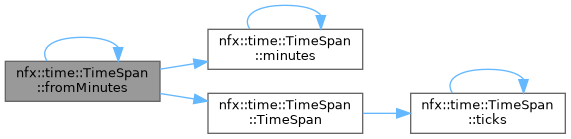
| static constexpr TimeSpan | fromMinutes (double minutes) noexcept |
| Create a TimeSpan from a number of minutes. | |
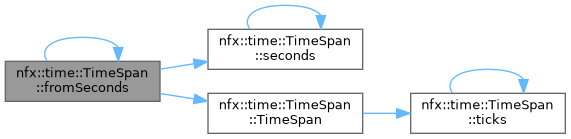
| static constexpr TimeSpan | fromSeconds (double seconds) noexcept |
| Create a TimeSpan from a number of seconds. | |
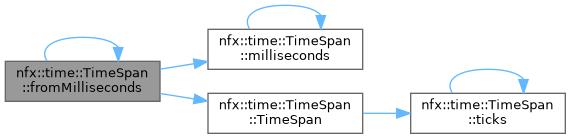
| static constexpr TimeSpan | fromMilliseconds (double milliseconds) noexcept |
| Create a TimeSpan from a number of milliseconds. | |
| static constexpr TimeSpan | fromMicroseconds (double microseconds) noexcept |
| Create a TimeSpan from a number of microseconds. | |
| static constexpr TimeSpan | fromTicks (double ticks) noexcept |
| Create a TimeSpan from a number of ticks (100-nanosecond units). | |
Friends | |
| TimeSpan | operator* (double multiplier, const TimeSpan &ts) noexcept |
| Multiply time duration by a scalar value (reverse order). | |
Detailed Description
Represents a time interval in 100-nanosecond ticks.
Provides high-precision time duration representation and arithmetic operations. Compatible with ISO 8601 duration format for parsing and formatting operations.
Key features:
- 100-nanosecond tick precision for maximum accuracy
- Range: ±10,675,199 days (approximately ±29,247 years)
- Arithmetic operations (addition, subtraction, comparison)
- ISO 8601 duration parsing and formatting (P[n]Y[n]M[n]DT[n]H[n]M[n]S)
- Factory methods for common time units (days, hours, minutes, seconds)
- Conversion methods to various time units with fractional support
This class represents a duration or elapsed time interval, not a specific point in time. For absolute time values, use DateTime or DateTimeOffset.
- Note
- TimeSpan is designed for duration calculations and should not be used to represent calendar dates or clock times. Use DateTime or DateTimeOffset instead.
Definition at line 135 of file TimeSpan.h.
Constructor & Destructor Documentation
◆ TimeSpan() [1/3]
|
inlineexplicitconstexprnoexcept |
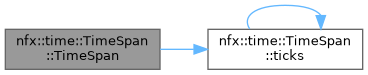
Construct from ticks (100-nanosecond units).
- Parameters
-
ticks Number of 100-nanosecond intervals for this TimeSpan (defaults to 0)

◆ TimeSpan() [2/3]
|
inlineexplicitconstexprnoexcept |
Construct from std::chrono duration.
- Parameters
-
duration System clock duration to convert from

◆ TimeSpan() [3/3]
|
explicit |
Parse from ISO 8601 string.
- Parameters
-
iso8601String ISO 8601 formatted string to parse

Member Function Documentation
◆ days()
|
inlinenodiscardnoexcept |
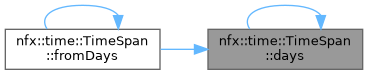
Get total days.
- Returns
- The total number of days represented by this TimeSpan (fractional)
- Note
- This function is marked [[nodiscard]] - the return value should not be ignored
◆ fromChrono()
|
staticnodiscardnoexcept |
Create TimeSpan from std::chrono::system_clock::duration.
Converts a std::chrono duration to a TimeSpan. Values outside the representable range of TimeSpan will be clamped to the nearest valid TimeSpan value.
- Parameters
-
duration The system_clock duration to convert
- Returns
- A TimeSpan representing the same time duration
- Note
- This function is marked [[nodiscard]] - the return value should not be ignored


◆ fromDays()
|
inlinestaticnodiscardconstexprnoexcept |
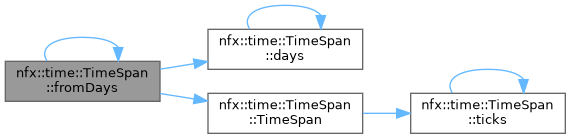
Create a TimeSpan from a number of days.
- Parameters
-
days The number of days for the TimeSpan duration
- Returns
- TimeSpan representing the specified number of days
- Note
- This function is marked [[nodiscard]] - the return value should not be ignored
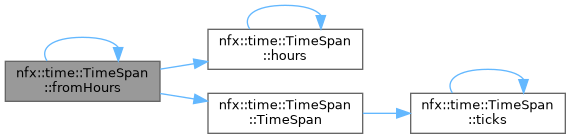
◆ fromHours()
|
inlinestaticnodiscardconstexprnoexcept |
Create a TimeSpan from a number of hours.
- Parameters
-
hours The number of hours for the TimeSpan duration
- Returns
- TimeSpan representing the specified number of hours
- Note
- This function is marked [[nodiscard]] - the return value should not be ignored
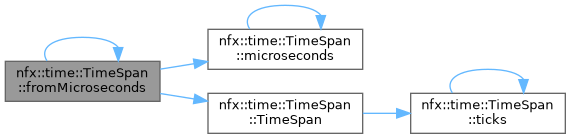
◆ fromMicroseconds()
|
inlinestaticnodiscardconstexprnoexcept |
Create a TimeSpan from a number of microseconds.
- Parameters
-
microseconds The number of microseconds for the TimeSpan duration
- Returns
- TimeSpan representing the specified number of microseconds
- Note
- This function is marked [[nodiscard]] - the return value should not be ignored
◆ fromMilliseconds()
|
inlinestaticnodiscardconstexprnoexcept |
Create a TimeSpan from a number of milliseconds.
- Parameters
-
milliseconds The number of milliseconds for the TimeSpan duration
- Returns
- TimeSpan representing the specified number of milliseconds
- Note
- This function is marked [[nodiscard]] - the return value should not be ignored
◆ fromMinutes()
|
inlinestaticnodiscardconstexprnoexcept |
Create a TimeSpan from a number of minutes.
- Parameters
-
minutes The number of minutes for the TimeSpan duration
- Returns
- TimeSpan representing the specified number of minutes
- Note
- This function is marked [[nodiscard]] - the return value should not be ignored
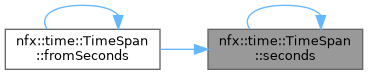
◆ fromSeconds()
|
inlinestaticnodiscardconstexprnoexcept |
Create a TimeSpan from a number of seconds.
- Parameters
-
seconds The number of seconds for the TimeSpan duration
- Returns
- TimeSpan representing the specified number of seconds
- Note
- This function is marked [[nodiscard]] - the return value should not be ignored

◆ fromString() [1/2]
|
staticnodiscardnoexcept |
Parse ISO 8601 duration string and return optional TimeSpan.
- Parameters
-
iso8601DurationString The ISO 8601 duration string to parse (e.g., "PT1H30M" or "123.456")
- Returns
- std::optional<TimeSpan> containing the parsed value if successful, std::nullopt otherwise
- Note
- This function is marked [[nodiscard]] - the return value should not be ignored

◆ fromString() [2/2]
|
staticnodiscardnoexcept |
Parse a TimeSpan from a string safely without throwing exceptions.
Supports the following formats:
- ISO 8601 duration (standard): "PT1H30M45S", "P1DT2H", "-PT45S", "PT0.5S"
- Numeric seconds (convenience): "123.45", "-60" (interpreted as seconds)
- Parameters
-
iso8601DurationString The string to parse result Reference to store the parsed TimeSpan if successful
- Returns
- true if parsing succeeded, false otherwise
- Note
- This function is marked [[nodiscard]] - the return value should not be ignored
- Format Requirements
- ISO 8601 format must start with 'P' and contain at least one component (H, M, S, or D). Numeric format accepts only digits, decimal point, and optional leading minus sign. Empty strings and invalid formats return false.

◆ fromTicks()
|
inlinestaticnodiscardconstexprnoexcept |
Create a TimeSpan from a number of ticks (100-nanosecond units).
- Parameters
-
ticks The number of 100-nanosecond ticks for the TimeSpan duration
- Returns
- TimeSpan representing the specified number of ticks
- Note
- This function is marked [[nodiscard]] - the return value should not be ignored

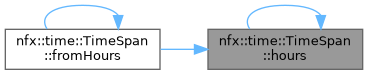
◆ hours()
|
inlinenodiscardnoexcept |
Get total hours.
- Returns
- The total number of hours represented by this TimeSpan (fractional)
- Note
- This function is marked [[nodiscard]] - the return value should not be ignored
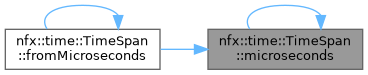
◆ microseconds()
|
inlinenodiscardnoexcept |
Get total microseconds.
- Returns
- The total number of microseconds represented by this TimeSpan (fractional)
- Note
- This function is marked [[nodiscard]] - the return value should not be ignored
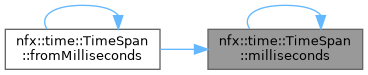
◆ milliseconds()
|
inlinenodiscardnoexcept |
Get total milliseconds.
- Returns
- The total number of milliseconds represented by this TimeSpan (fractional)
- Note
- This function is marked [[nodiscard]] - the return value should not be ignored
◆ minutes()
|
inlinenodiscardnoexcept |
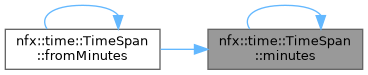
Get total minutes.
- Returns
- The total number of minutes represented by this TimeSpan (fractional)
- Note
- This function is marked [[nodiscard]] - the return value should not be ignored
◆ nanoseconds()
|
inlinenodiscardnoexcept |
Get total nanoseconds.
- Returns
- The total number of nanoseconds represented by this TimeSpan (fractional)
- Note
- This function is marked [[nodiscard]] - the return value should not be ignored
◆ operator*()
|
inlinenoexcept |
Multiply time duration by a scalar value.
- Parameters
-
multiplier The value to multiply by (integer or floating-point)
- Returns
- New TimeSpan representing the scaled duration
- Note
- Integer values are automatically converted to double

◆ operator+()
Add time durations.
- Parameters
-
other The TimeSpan to add to this TimeSpan
- Returns
- New TimeSpan representing the sum of both durations

◆ operator+=()
Add time duration (in-place).
- Parameters
-
other The TimeSpan to add to this TimeSpan
- Returns
- Reference to this TimeSpan after adding the duration

◆ operator-() [1/2]
|
inlineconstexprnoexcept |
Negate time duration.
- Returns
- New TimeSpan representing the negated duration

◆ operator-() [2/2]
Subtract time durations.
- Parameters
-
other The TimeSpan to subtract from this TimeSpan
- Returns
- New TimeSpan representing the difference between durations

◆ operator-=()
Subtract time duration (in-place).
- Parameters
-
other The TimeSpan to subtract from this TimeSpan
- Returns
- Reference to this TimeSpan after subtracting the duration

◆ operator/() [1/2]
|
inlinenoexcept |
Divide time duration by another TimeSpan.
- Parameters
-
other The TimeSpan to divide by
- Returns
- The ratio of this TimeSpan to the other (how many times the other fits in this)

◆ operator/() [2/2]
|
inlinenoexcept |
Divide time duration by a scalar value.
- Parameters
-
divisor The value to divide by (integer or floating-point)
- Returns
- New TimeSpan representing the scaled duration
- Note
- Integer values are automatically converted to double

◆ operator<=>()
|
inlineconstexprnoexcept |
Three-way comparison operator.
- Parameters
-
other The TimeSpan to compare with
- Returns
- std::strong_ordering indicating the relative order of the two TimeSpans

◆ operator=() [1/2]
Copy assignment operator.
- Returns
- Reference to this TimeSpan after assignment

◆ operator=() [2/2]
Move assignment operator.
- Returns
- Reference to this TimeSpan after assignment

◆ operator==()
|
inlineconstexprnoexcept |
Equality comparison.
- Parameters
-
other The TimeSpan to compare with
- Returns
- true if both TimeSpans represent the same duration, false otherwise

◆ seconds()
|
inlinenodiscardnoexcept |
Get total seconds.
- Returns
- The total number of seconds represented by this TimeSpan (fractional)
- Note
- This function is marked [[nodiscard]] - the return value should not be ignored
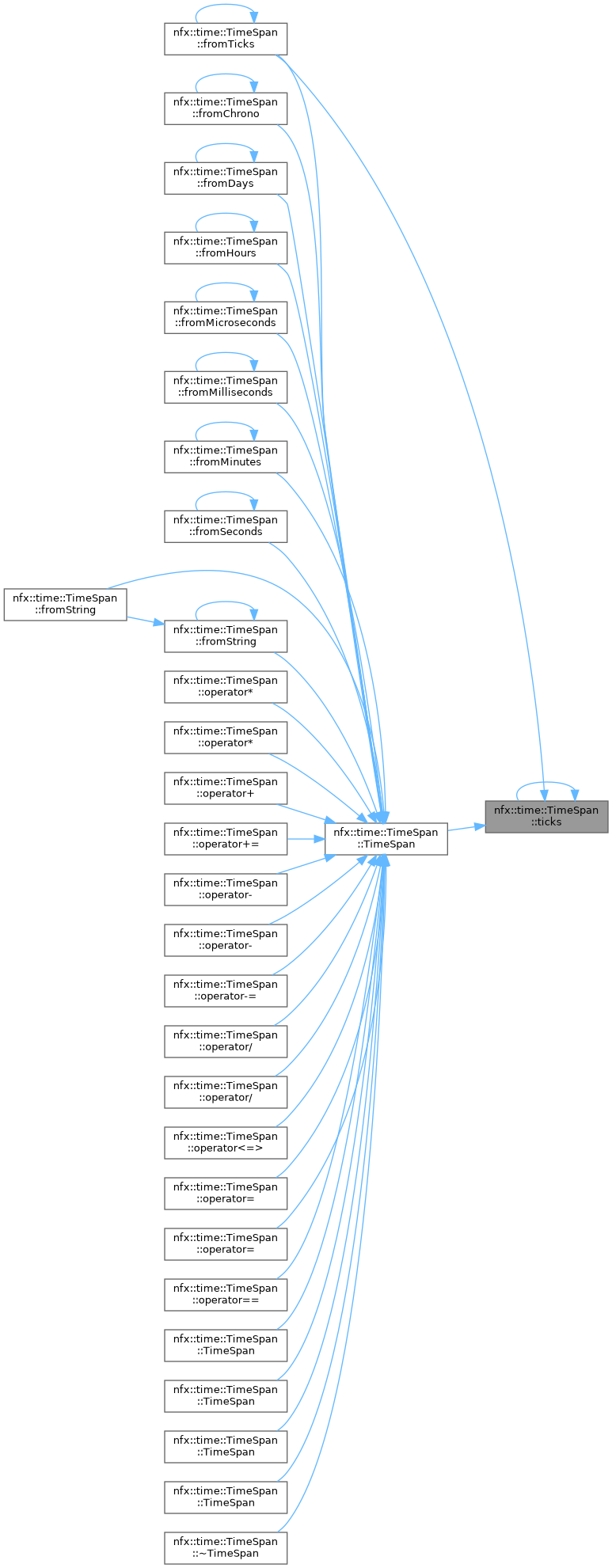
◆ ticks()
|
inlinenodiscardconstexprnoexcept |
Get tick count.
- Returns
- The number of 100-nanosecond intervals in this TimeSpan
- Note
- This function is marked [[nodiscard]] - the return value should not be ignored
◆ toChrono()
|
nodiscardnoexcept |
Convert to std::chrono::system_clock::duration.
Converts this TimeSpan to a std::chrono duration type. Values outside the representable range of std::chrono::system_clock::duration will be clamped to the nearest representable value.
- Returns
- A system_clock::duration representing this TimeSpan
- Note
- This function is marked [[nodiscard]] - the return value should not be ignored
◆ toString()
|
nodiscard |
Convert to ISO 8601 duration string.
- Returns
- String representation in ISO 8601 duration format (e.g., "PT1H30M45S")
- Note
- This function is marked [[nodiscard]] - the return value should not be ignored
Friends And Related Symbol Documentation
◆ operator*
Multiply time duration by a scalar value (reverse order).
- Parameters
-
multiplier The value to multiply by (integer or floating-point) ts The TimeSpan to multiply
- Returns
- New TimeSpan representing the scaled duration
- Note
- Integer values are automatically converted to double
The documentation for this class was generated from the following file:
